p1

RV Storage on City Streets


Currently, anyone can park a motorhome or trailer on the street provided it’s moved within 48 hours.  Problem is some people circumvent the intent of the law by driving it around the block or pulling ahead a few feet.
Tonight, the City Council will consider an ordinance preventing these people from using city streets for storage of recreational vehicles and trailers.  If the proposed ordinance is adopted, you’ll still be able to load and unload your camp trailer, but it can’t be returned within 500 feet of the same location within “two non-consecutive 24-hour periods in a 7 consecutive calendar day time period” – attorney speak for “overnight is okay, but not all week.”
If you have any concerns about the proposed ordinance, contact a member of the city council.

Read more
p1

Door-to-Door Ordinance Revisited


Last summer, we investigated four cases involving door-to-door salesman behaving badly – very badly.  One was arrested for burglary and two others for sexual assault.  All of them were from out of town and most had criminal records.
This is one of those ordinances that has a lot more complexity than meets the eye because of first amendment issues.  I blogged on that a few months ago.  Take a look at the current proposed ordinance.  If you have any concerns for or against, contact a member of the city council or attend the city council meeting Thursday evening.

Read more
p1

Ken Knoelk Retires With Honor


Ken joined the Idaho Falls Police Department Jan 11, 1982, a week after I did.  Yeah, we’re old.
Ken's 30-years as a police officer certainly didn't leave him without stories to tell.  He was shot in the abdomen responding to a robbery in 1985.  He was one of the first officers that had the wisdom to wear a protective vest.  At that time, we had to buy our own.  It made a nicely colored bruise, but he was otherwise okay.
Ken has received many honors, including a Commander’s Commendation and Employee of the month twice.  Most recently, Ken has been a key organizer and promoter of the Citizen’s Academy.
I’ve had the opportunity to work with Ken on the street.  In fact, Ken was the first one to introduce me to pepper spray – an up close and personal introduction.  We were on a domestic getting ready to arrest a really big guy that didn’t care to go to jail.  Ken yelled, “OC” and I wasn’t quick enough to get out of the way.  He nailed both of us.  It turned out okay, but kids, don’t try this at home.
Ken has been a ray of sunshine in an otherwise shady environment.  When faced with adversity, some people grow and some people tank.  Ken is one of those that grew tremendously and his positive attitude is contagious.  Ken, I love you and wish you the best.

Read more
p1

10-years of Service

Read more
p1

Changing Perspectives Through Shopping


By Joelyn Hansen

Perceptions of police officers are not always positive. Officers are often called upon to make tough decisions that ultimately change the path of whom they interact with. Sometimes those decisions result in someone being taken to jail or children being taken from a home. In the bigger picture, police are trying to protect society and the individuals directly involved. But, on the smaller scale, sometimes they’re viewed as the “bad” cop – especially by children who don’t fully understand the reasons behind the officer’s decisions or actions.
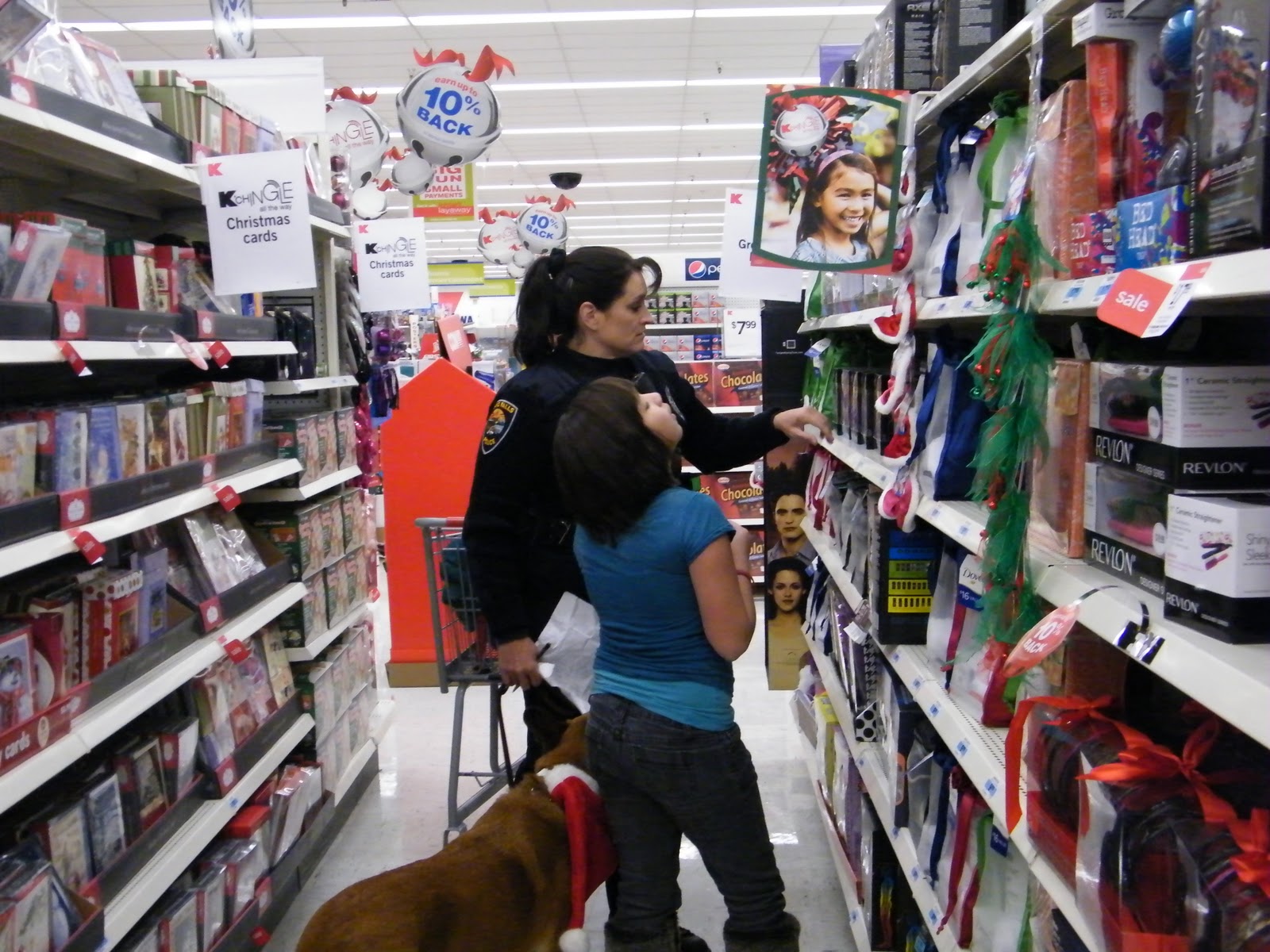
Nearly two decades ago, local law enforcement and community groups geared at helping children came together and started the “Shop with a Cop” program in Bonneville County. Their mission wasn’t merely to start a charity program, but instead changing the attitude of children adversely affected by law enforcement.
For one Saturday morning during the Christmas season, a child is paired with an officer or member of law enforcement to shop for a few hours in hopes that child will know that law enforcement truly cares about their well-being.
This last Saturday, 29 children had the opportunity to participate in the 2011 Shop with a Cop program. Organizers aren’t able to look into the crystal ball of the future to see whether or not any of these children will look at law enforcement differently. But, hopefully, from the joy felt by all that participated, they’ll at least remember this one day as a postive experience.


Read more
p1

CSI Pays Off - Again


Ever have mixed feelings about technology?  What’s that saying about mixed feelings – “seeing your mother-in-law drive over a cliff in your brand new Mercedes”? 
This time, for the IFPD, technology paid off nicely with some reoccuring burglaries.  Unlike Hollywood, technology doesn’t solve cases, but it helps.  Flowers at the Falls was hit three times over the past four months.  Each time a window or door was broken.
We solved the case with a blend of new tech fingerprint analysis, foot prints, and old fashioned detective work.  Our Crime Scene Tech managed to collect finger prints from glass shards which led investigators to a suspect we arrested last night.  One without the other wouldn’t have gotten the job done.
By the way, I’m lucky.  I have a really cool mother-in-law.  No, really!  And my children's spouses also have a great mother-in-law. 
I think I can hear Rebecca's voice whispering in the back of my mind, "stop digging."

Read more
p1

Public Trust of Police

Trust strikes at the heart of why our constitutional form of government works.  If people have a general trust for the legal system, police in particular, they are more likely to follow the law.  In fact, the reason we can police with so few officers is that the majority of citizens are moral and trust us. Former U.S. President John Adams once wrote, “Our Constitution was made only for a moral and religious people. It is wholly inadequate to the government of any other.”
We can’t do our job unless the public trusts us.  Without public support and cooperation, our efforts would be paralyzed.  People who trust us are more compliant – even the bad guys.  Those on the edge are more likely to provide information.
Trust also creates a safer working environment for the police.  Some time ago, one of our officers, who was being assaulted, was rescued by a group of men attending an AA meeting.  You can guess that many of these guys had probably been arrested for DUI or something else in the past.  The fact that they put themselves in jeopardy to save a police officer is a tribute to the way police dealt with them in the past.
Public confidence in police has been steady at 50-60% over the past couple decades even though crime has trended downward since 1990.  The Gallup poll illustrated above puts this confidence into perspective as compared to other institutions.
Two keys to obtaining trust are character first and then competence second.
The perception of fairness is more important than outcome.  People need to be listened to and know that police are neutral.  Even if we don’t always get it right, it’s important that the public trust that we’re trying to do the right thing.  To that end, we tell you like it is, but also try to be nice about it.
Our good intentions aren’t enough.  We also need to deliver results.  When we screw up, we try to fix it.  The people inside the police department are doing a fantastic job of delivering results and we’re pushing the bar higher.  I’ll write more on this in another blog.
The public’s trust is sacred and if I ever get a little defensive about it, it’s probably because I know our motives are pure.  I also know that without the public trust, we couldn’t do our job effectively.

Read more